
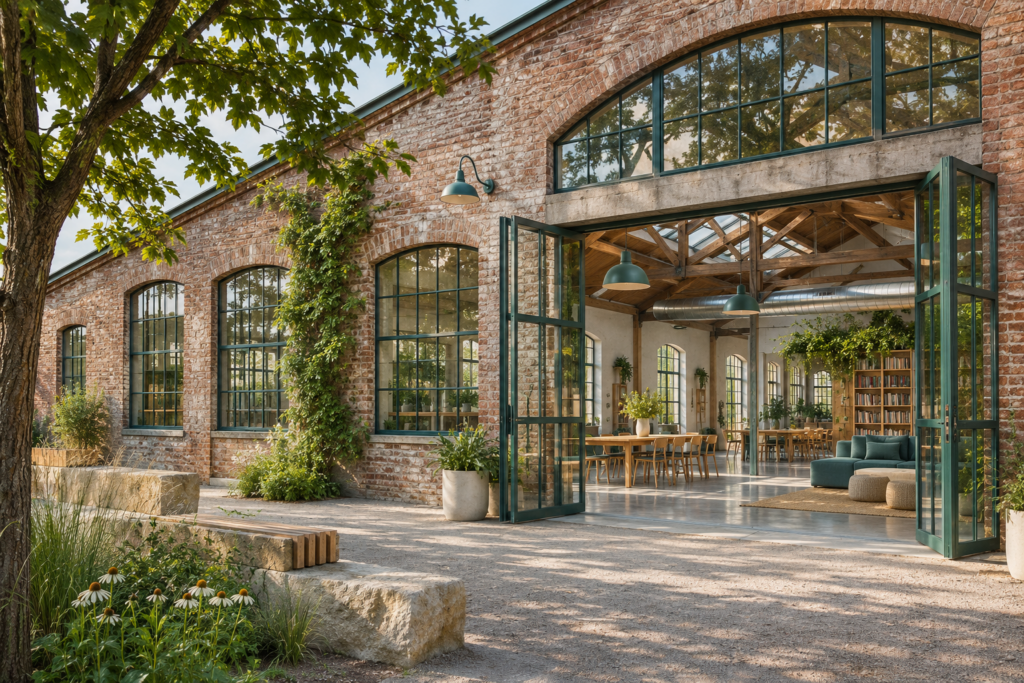
Adaptive Reuse: Reading the Potential of an Old Building
An old warehouse, school or shop can support a new purpose without losing every trace of its past. Adaptive reuse begins with understanding what the existing building can offer and what a new use will demand.
Study the structure before the style
Wide spans, generous ceiling heights and regular windows may suggest opportunities, but appearance alone cannot establish suitability. A qualified assessment should examine structure, moisture, fire safety and accessibility before a project commits to a layout. Historic materials may require specialist handling.
Match the use to the building
A quiet workspace and a busy food hall create very different requirements for ventilation, sound, deliveries and waste. Consider the neighbouring streets as part of the project. A successful interior can still cause problems if servicing blocks the pavement or late activity disturbs nearby homes.
Keep useful character
Retaining a staircase, a robust floor or a distinctive entrance can give a place continuity. Preservation is not the same as keeping everything untouched: changes should make the building usable and maintainable. Compare realistic repair and operating costs with alternatives, and leave room in the budget for discoveries during construction.