
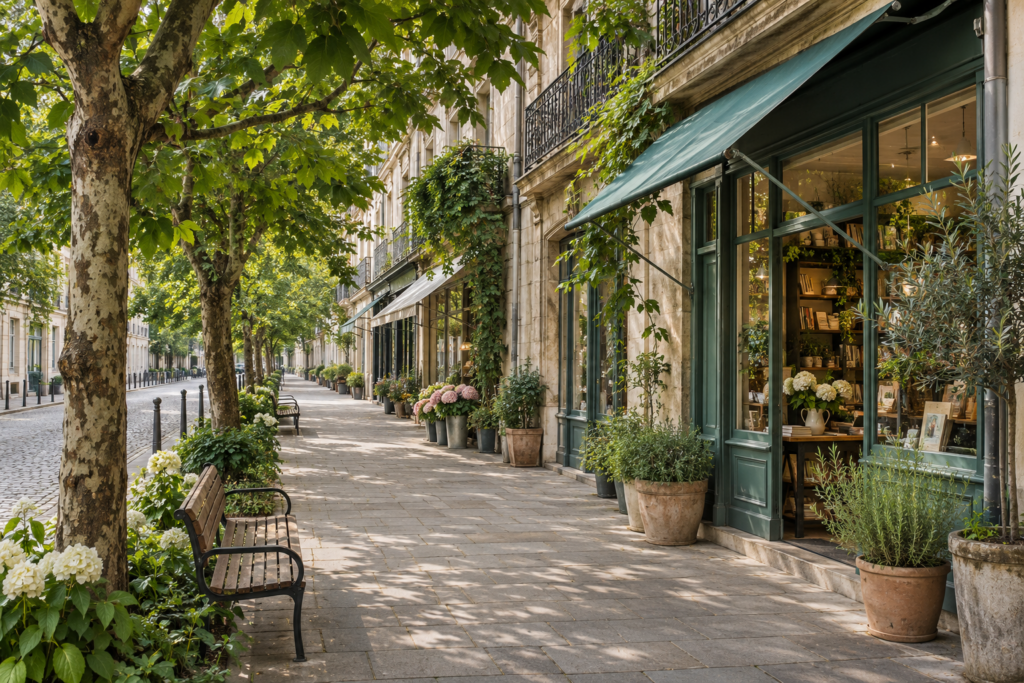
What Makes a Neighbourhood Feel Walkable?
A short distance on a map does not always make an easy walk. A neighbourhood can put shops, schools and parks close together while leaving people to navigate broken pavements, uncomfortable crossings or streets with nowhere to pause. Walkability is the experience of the whole journey.
Start with the everyday trip
Choose a familiar destination and walk there at an ordinary pace. Notice where the route asks you to step around parked cars, wait through several traffic-light cycles or cross without a clear view. Try the same route with a shopping bag, a pushchair or a friend who moves more slowly. These small observations often reveal more than a simple distance calculation.
Crossings connect the network
A continuous pavement is useful only if it connects safely to the next one. At junctions, look for clear sightlines, enough crossing time and space to wait without blocking other people. A refuge island can divide a wide crossing into stages, but it must be large enough for the people using it. The most direct route should not require an unnecessary detour.
Comfort matters between destinations
Shade, seating and shelter make a practical difference. A bench halfway to the shops may turn an exhausting trip into a manageable routine. Trees and awnings can make exposed streets more comfortable, while lighting helps people see changes in surface level after dark. These features need maintenance as well as installation.
Keep the pavement useful
Outdoor dining, planting and signs can bring character to a street. They also compete for space. A clear walking route should remain available beside them, with particular attention to corners and entrances. Predictable surfaces and unobstructed paths help people using wheelchairs, walking aids and white canes.
A simple neighbourhood audit
Record the route, time of day and specific obstacle rather than labelling an entire area good or bad. Photograph the problem without identifying passers-by, note who it affects and suggest a focused improvement. Several observations from different residents can help distinguish an occasional inconvenience from a persistent barrier.
A walkable neighbourhood is built through connected decisions: useful destinations, reliable crossings and comfortable public space. Improving one difficult junction or restoring a blocked pavement can be a meaningful place to begin.